Friday, August 16, 2013

Friday's notes


Jessica Kim, (jessica.kim@csun.edu, Assistant Professor of History, CSUN)

Empire, California, and the Mexican Revolution: 1880s-1930s (californiamexico.weebly.com)

  • Letter from WC Dunn to the Quimichis Colony, Nov. 8, 1915: CA ranchers living in Mexico, feeling frustration that the US isn't supporting them in the lawlessness occurring on their properties. 1910: a group of Pasadena investors, spearheaded by Thomas Bard purchase 100,000 acres of ranch land along the coast in the state of Nayarit, Mexico. (Bard founded the town of Oxnard, Occidental College, & Union Oil; purchased Spanish land grants from Californios... there's an oil museum to visit in Santa Paula) They believed Mexican investment would make them globally important. Herman Reamer, a Pasadena dentist, purchased 500 shares of the ranch. Group wants to develop corn and sugar. Beforehand, rural villages would communally hold land. At this time, large investors bought up rural land including homes of ranchers in the area; these farmers earn back the rights to their land as they work, farming the are around them. Rancho was successful the 1st 2 years.
  • Edward Doheny controlled 50% of the petroleum industry in Mexico.
  • 1910: The Mexican revolution breaks out due to the widening gap between the rich and the poor. Economic inequality, American investment (12 families--American and Mexican--owned 80% of all private land in Mexico), and political reform (Diaz was Mexico's president for 30 years) all contributed to the revolution. Rural farmers were fed up with landowners. It was a civil war fought with guerrilla tactics. 
  • With more background, we have a deeper perspective on all the parties involved, and less sympathy for the letter's author, expecting American justice in a land that's seen injustice for generations, especially since he's perpetuating that injustice. 
  • Thoughts: Consider presenting this letter as a "persuasive letter" for students to dissect. Also a great tie in to the early colonists and the cause of the American revolution, and a discussion of indentured servitude. Raul thought it was worthwhile to read this source cold, give the background, then reread for more understanding and a fresh perspective. Joshua shared that he saw the benefits of starting a topic with a highly engaging letter or article from a period newspaper to grab students' interest.
Raul: A great primary source exercise: students bring in menus, placemats, photos, etc., and label with numbers. The class next door does the same; students swap classrooms and try to guess who went where.

More notes from Raul

Raul's mission images:

  • San Carlos Borromeo: Serra was buried here; remember painting with ruins of SCB
  • La Purisima: sells soap made from tallow. Great primary source to pass around class. "Making tallow" image: ask students to imagine what they would hear, smell, etc. 

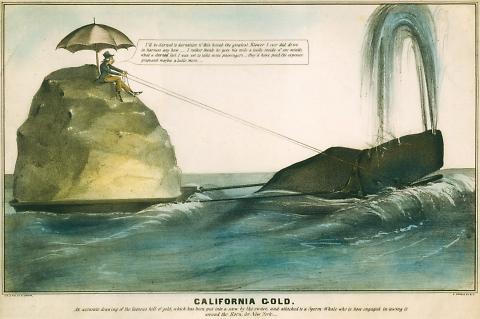
Gold Rush:

Tools:

More Raul Tips

  • Library of Congress: On the teacher's page on the website, if you're pulling up an image, choose .jpg unless you want a really high res copy... then choose .tiff. 


Thursday, August 15, 2013

Thursday's notes

Notes from Serra's Exhibit (curated by Steven Hackel, steven.hackel@ucr.edu  and Catherine Gudiscatherine.gudis@ucr.edu)

Beginnings/Mallorca:
  • Priest's robe: was "cleaned up" before being sent to Huntington.
  • Martyr painting: lots of gore... boys will love it. Note the roll-up painting pulled from chapel (old school flash card). See roll up in next room with baptism of Christ. 
Main room:
  • Door: from San Gabriel mission. See in painting across hall. 
  • Names on wall: both Christian name and Indian name; like a Vietnam wall.
  • Violin: recorded in 2008. Stolen soon after recording. 
  • Indian baskets have Spanish seal woven in, as well as weaver's name.  
Serra's death: 
  • "Ghost" painting: artist wasn't sure if they wanted the priest administering the last communion or not
  • Relic cross has bones of saints in it.
  • Someone opened Serra's casket and pulled burial shroud and cross from it.  
More modern times:
  • Old purisima photo: look for fissure in earth from earthquake. 
  • Girl blowing bubble: families doing mission play. 
  • Charles Lummis: promoted missions as reporter who walked across the US. 
  • Clay tile with footprints
  • Red tile myth: Indians shaped red tiles on their legs. 
Final room: 
  • Basket made from soda/beer cans. Tying in alcoholism & diabetes. 
  • Video has scrim to give a blurrier feel to it. 
  • Necklace: Vincent Medina Jr. Ohlone native in his 20s; has a blog (Being Ohlone in the 21st Century); tweets in native Ohlone. 
  • Early 20th C textbooks were inaccurate in several ways; present work is trying to correct that. 

Eric Steiger (esteiger@uci.edu), Irrigation Visions in California

  • 1800s: experiencing a true desert
    • 1840s: Division line for CA and Mexico: end of Sea of Cortez across to just south of SD Bay. Congress sent the Army Corps of Topographical Engineers to conduct the survey for the United States. Surveyors go out to determine the border. William H. Emory was in charge. Click here for map. The rare water puddle finds animals drinking themselves to death and falling into the water, corrupting it as their carcasses rot. Location of the Salton Basin, aka. the Colorado Desert. 1880s: farmers harvest salt to ship via train. Min 20" of rainfall to sustain agriculture. 
    • The answer? Irrigation. The "Goddess of Water" makes CA bloom. 
  • There's nothing obvious about irrigating a desert
    • John Muir: Muir's Tulare Levels. Writes a letter on the benefits of using irrigation, based on his observations of farmers in Tulare County. 
    • William E. Smythe: "An International Wedding." A very positive outlook of the desert, arid regions of the west. "All we have to do is bring water to them." Compared it to the Nile. He later wrote "The Conquest of Arid America." Another positive spin on manmade irrigation vs. nature. It's predictable and controllable. 
    • Also: The West: A Plundered Province, by Bernard Augustine De Voto.
  • Desert irrigation is more than just about raising crops and making money
    • George Chaffey & Charles Rockwood and the Colorado River Irrigation Company.  First attempts at digging a canal for the Imperial Valley had hits and misses: not dug deep enough the first time, leaving 3,000 people high and dry; dug deeper the second time, but with no gate to control it; heavy flood was a disaster. Hoover Dam solved the problem. 
    • Damming the west: the Columbia, the Missouri, the Colorado, and the CA Dam projects.
  • (Click here to download a copy of Eric's PowerPoint.)


Rachel on Lessons & Resources for The Huntington Exhibits

  • Exploring the CA Missions: The Huntington's education website, missionhistory.org. Focused on CA history and 4th grade. 2 complete lessons. Note that high resolution images to use with the lessons are under the link called Images & Credits.
    • Teacher's Information: preparing the class on using primary sources.  
    • Everyday Life: DL the lesson plan; project in the classroom, reap the benefits. Focuses of Fr. Serra's main mission, as well as several primary sources. Some of the materials can be printed out in HR to share with students. If you want to view the San Gabriel Mission photo without the text, click here. (Be sure to discuss various stages of undress that may be seen on some of the old prints.)
    • Religion & Spirituality: Continuing on with the next lesson. The traditional Catholic hymn "Salve" is called "Salve Regina;" the Latin text can be found here. There's a prayer board in the images as well… here's a link to a higher resolution copy.  Neat note: natives brought percussion to the songs the padres were using at the missions.

Wednesday, August 14, 2013

Wednesday's notes


Raul's morning notes


David Igler on the Pacific, The Great Ocean

  • This project's origin: saw a map of the American west from 1846… new political boundaries in a period of transitions (often in a state of flux). What drew is eye was the ocean, not the land… "the mystery of the landscape and the water;" the northeast region of the Pacific Ocean. 
  • CA, circa 1666, was thought to be an island (click here to view). Map was way off on the island part, but has highly detailed inlets and harbors. Also view the 1660 map.
  • Origin story #2: explore the intersecting scales of history: global, oceanic, regional, local. (Hudson's Bay Trading Co ship, the Beaver… click to view.)
  • Seas of commerce: Pacific connections with coastal Alta California. The old Spanish galleons trade to Manila. 
  • William ShalerJournal of a Voyage, 1806. Visits CA in 1803 from Canton, China. Great descriptions of CA, its native people, the missions, the state of population in Baja CA; also perceived that a good government is required for CA to succeed. 
  • Disease, sex, and indigenous depopulation: smallpox, tuberculosis, venereal syphilis… wave after wave of disease is "imported" from Europe and decimates the native population. Priests, specifically Fr. Serra, were very concerned about these diseases and their aftermath. The Great Hunt: sea otters, seals, and whales were decimated for Chinese and American markets. Diary of Mary Brewster: wife of a sea captain traveling on a whaling ship for 3 years. CA was a place where all the whale ships arrived, and used it as a refueling and re-watering station. 
  • Naturalists and natives in the great ocean: ethnography and natural history. Begins on some of the earliest Spanish voyages; continues with British, French, Russian naturalists researching the flora, fauna, geography, and the native peoples. Kadu (a native of the Marshall Islands), Adelbert von Chamisso  and JD Dana were contemporary authorities.
  • Endings: the opium ship Frolic crashes into North America. 
  • Another great map resource is the David Rumsey website. Click here.


Daniel B Lynch (daniellynch@ucla.edu): CA in the Civil War Era

  • George Patton: Born & raised in Pasadena. His history book described CA briefly as part of the Mexican-American war. Controversy over slavery didn't end in 1850. Considerations were made to split CA into 2 states, slave and non-slave. Resolution was presented by Andres Pico, Pio Pico's brother. 
  • Transcontinental Telegraph (1861) & Railroad (1869): Telegraph provides a lifeline from the east to CA, to keep the state loyal to the Union. 
  • CA's contribution to the union: Thomas Starr King. Does the most to keep CA loyal and supportive of the war. CA supported the Union war effort by making donations to the US Sanitary Commission (supports the troops); 4 times more $ than the state of NY.
  • Paper currency was issued in desperation to keep the war effort going; CA didn't want to play by these rules, and wanted to set up taking gold coins instead. 
  • CA Latinos & the Civil War: Captain Jose Ramon Pico (nephew of Pio Pico) was one of the best horsemen in the west. Enlisted to fight for the Union. 
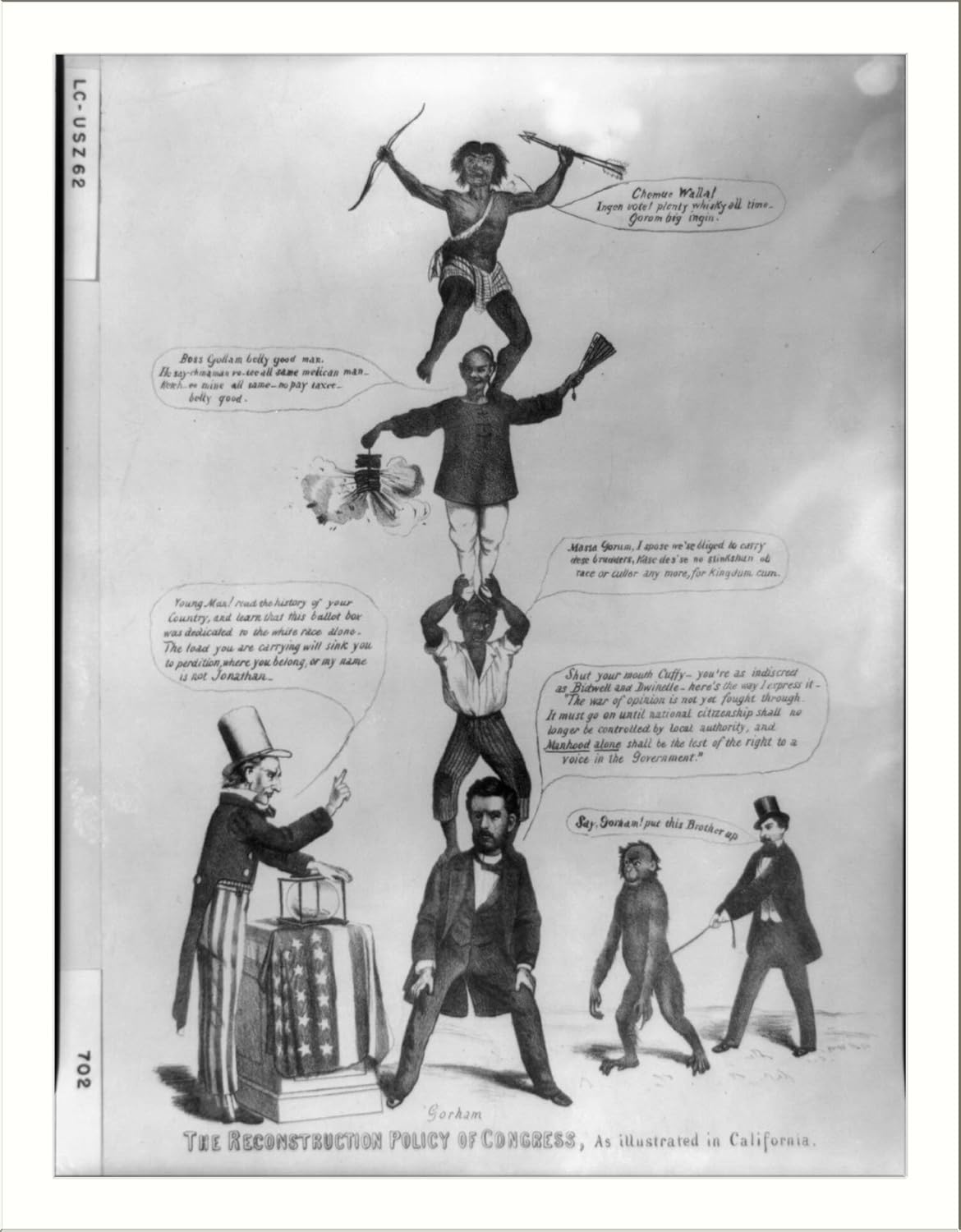
  • Reconstruction CA: At the time, Chinese population was 8%; now it's 4%. Racist anti-Gorham political broadside can be seen hereRestrictive racial covenants: limited reselling of homes mainly to whites. "No person or persons of Asiatic, African or Negro blood, lineage, or extraction shall be permitted to occupy a portion of said property." Early 1900s to 1940s.
  • LA's Chinese massacre of 1871: race riot, slaughtering 18 Chinese immigrants. 
  • Chivalry coalition: Gwin, Pico, Brent. As a pro-slavery Democrat, Gwin had an ideological direction which gave birth to the institutionalized right wing. During the 1850s, Gwin was not only the leading voice of local conservatism, but he was the catalyst to those who feared the impending changes in California society.
  • 1850s: NoCal vs. SoCal: SoCal was waypoint heading to SF. 
  • Open letter, Avila to Pico: pushing for the Democratic party in LA. 
  • Slave mart, 1850s LA, Horace Bell
  • Saturday, October 5, 2013, 1 p.m.: Fireside Chat at Campo de Cahuenga: Campo Director John Watkins (descendant of Romulo Pico) will present "Movers and Shakers of Early California" and relate his personal family stories that are interwoven into the regional history. 
  • John Gast's "American Progress." Painting personifying manifest destiny. See notes here
  • Great mission book to share with students: California Missions: The Earliest Series of Views Made in 1856Click here to buy online

Tuesday, August 13, 2013

Tuesday's notes


Bill Deverell

Westward expansion: 

  • consider teaching it not just as "gold was found in CA and everyone headed west." It's not just an inevitable march west, but takes place very, very gradually. 
  • Most Americans are born, live, and die within about 15 miles of their birthplace. "Looking for land just over the rise, or just beyond the sunset." Looking to be just a little bit better, gain just a little more land; society is mostly farm based. 
  • Farms grow just enough different products to barely sustain the family (or not). As time passes, farms grow more produce to sell and buy other items (1700-1820).
  • The boys are doing the work of men, and the girls are doing the work of women. School, maybe. Tied into the harvest. 
  • They can oftentimes read and write, but in a rudimentary manner. There's a variety in spelling and writing since there just aren't standards in teaching. Students would often write their name 3 times and numbers; they're very proud of their literacy. Samplers include letters and numbers, as well as the house; shows the women are in charge of the house. Most homes include the Bible,  Pilgrim's Progress and Shakespeare (they can act it out)McGuffey's Readerteach students the alphabet, handwriting, then a small parable. Lincoln does this so well since he was steeped in them growing up. Pastors were preaching that westward expansion would bring about the second coming… not fringe, but mainstream beliefs.
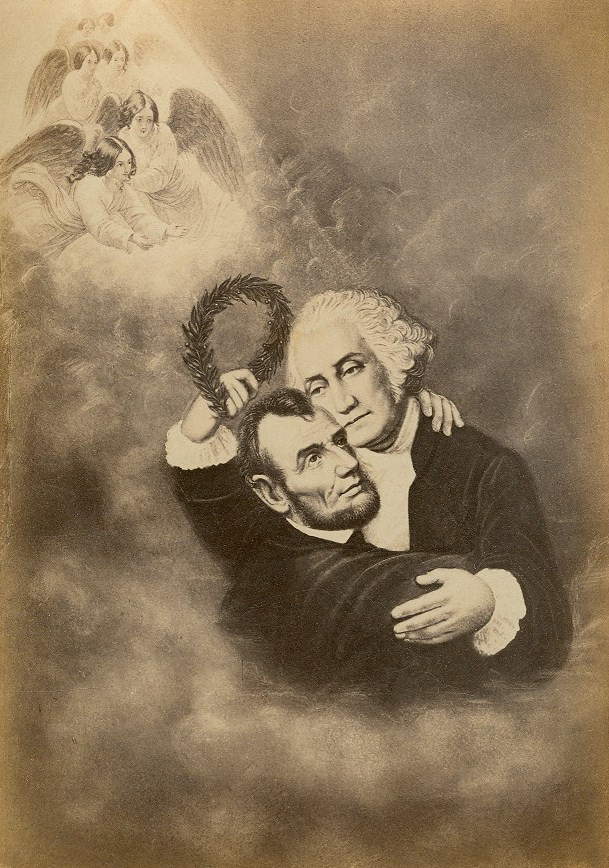
  • "Through Washington, great works were done." Washington was a tool/servant of God. At his death, was really honored as a hero. Lincoln died on Good Friday; Washington reaches down from Heaven, pulls him up to sit beside the right hand of God. 
  • Gettysburg address: focuses on a creation/conception/birth of a new nation; before Washington? The king. 

Early Republic:

  • Western New York: literate farmers; building institutions of higher learning; we have made sacred the documents of the nation (Bill of Rights, Constitution). 
  • The Burned Over District (update New York): Rome, Athens, New York: named as a reminder of our inheritance of the old republic. Farm houses had columns as a reminder of their Roman/Greek background. The country is new, and considered fragile. 
  • Thomas Jefferson: known as very smart, but looking out for #1. Considered a dandy, didn't fight in the war. President in 1800. "Tilling the soil is a noble profession." The new republic will work when the people are familiar with one another. Too big? Anonymity kicks in, and discourages accountability. If the country grows too big, one governing document won't be enough. The Louisiana Purchase doubled the size of America; so did the end of the Mexican War
  • 1803: Lewis and Clark were sent out to find out just how big the country is; take notes on what's there; be good to the Indians; look for "monsters." No one expected them to make it back. Given a Welsh translation book; they think the Indians spoke Welsh. Gone for 2 years, looking for a Northwest Passage. By 1869, the railroad crossed the country. After they return, Jefferson thinks we have more than enough land for everyone, and we'll never run into Indian trouble. 
  • Plains Indians: taller then the colonists… former idea was that greater height equals superiority. The colonists threw that theory out the window.
  • Washington freed his slaves at his death; Jefferson didn't. The slavery issue began to bubble up since people are becoming more educated. Women's moral authority is expanding beyond the house. Concerned about the amount of alcohol men are drinking; also grappling with anti-slavery. 
  • 1800, the American south: from the pulpit: we know slavery isn't a good thing, but we'll make the best of it. Seen as a "necessary evil." New England starts to be against slavery; the south backs off. The cotton gin cuts down the cost of cotton; 10 men can do the work of 100. New England buys the cotton from the south, processes it, ships off to Europe. William Lloyd Garrison preaches strongly against it, as well as Henry David Thoreau and Ralph Waldo Emerson. "Slaves are not self-sufficient." "Slavery is as if you're holding a wolf by the ears." Can't let go! 
  • Farmers are overworking their land and their slaves; keep slaves busy or they'll revolt. Cotton is robbing the land of nutrients; the south buys bat guano as fertilizer. They look to expand farming to Central and South America, including slaves; they're fearful their land will give out. Westward expansion = more farms… will the west be slave or free? 
  • Manifest destiny: God has granted you special rights to expand across the country. Brutal, xenophobic, but it worked. 1773-1883, we had the entire country, from sea to shining sea. "We found the gold because God made it so." The south is a martial culture; great at fighting. The south sent far more soldiers than the north to fight the Mexican War, so they felt the right to make the west slave states. A slave-free west opens the labor market for the average man. 
  • 1848-52 was the heyday of the gold rush. Americans are celebrating the fact that miners were classless in the gold fields. Quickly, however, class distinctions rose for those miners who come out with a slave; unfair advantage. 
  • The railroad does two profound things: it creates the northwest passage, and it's a suture to bring the north and south together. It's Godly, and it's healing. 
  • The triangular trade: Slaves from the west of Africa are brought into NA and the West Indies to process sugar cane and indigo to send to Europe. 

Raul Almada

The Temperance Movement:

  • The average American was drinking gallons of alcohol a day, which led to the temperance movement.
Heavenly George and Abe: 


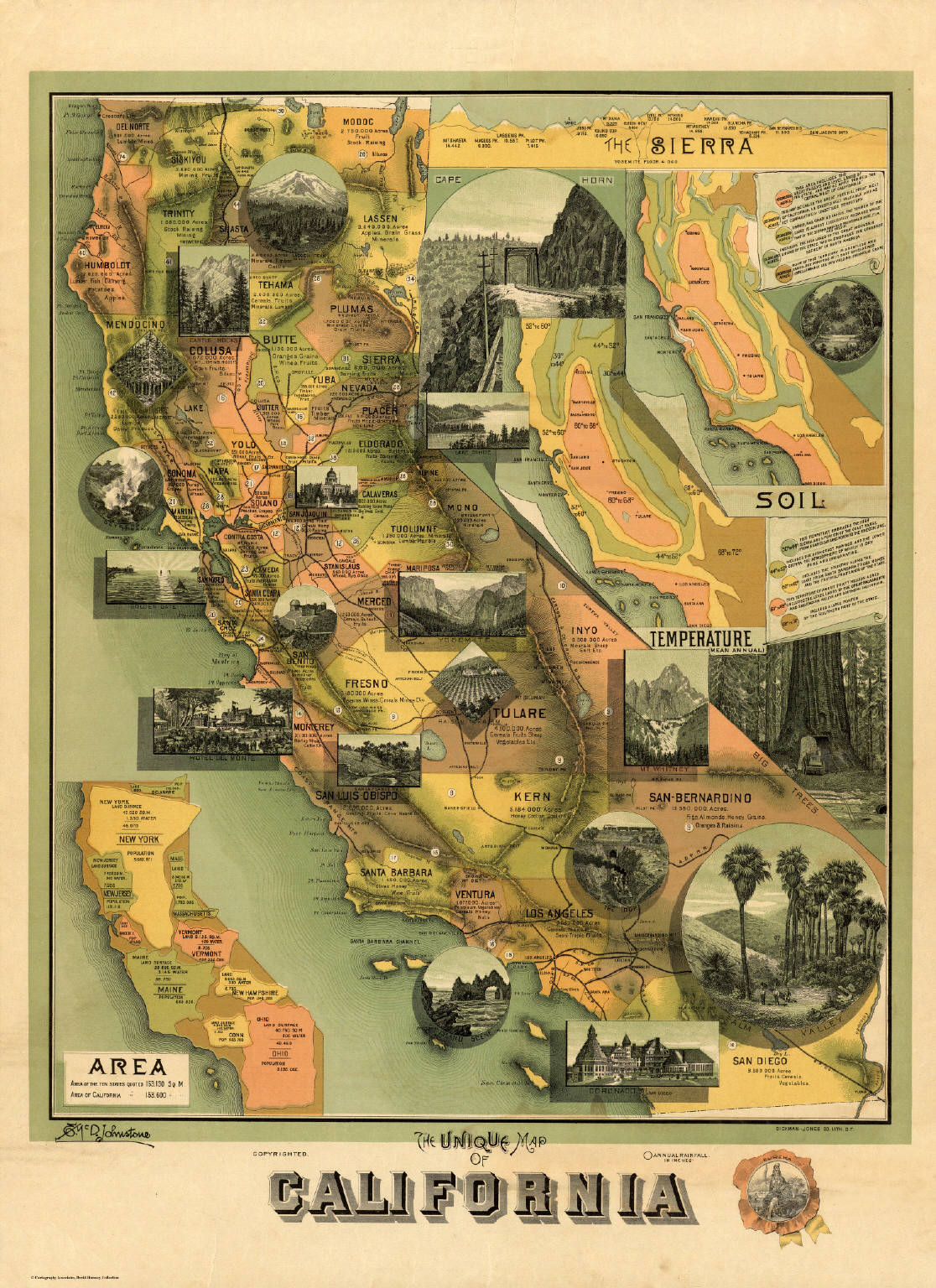
Maps: 

  • Lewis and Clark: their first map shows the Rockies, which Jefferson didn't know existed. 
  • American Slavery Map, 1860: shows the distribution of slaves across the south, pre-civil war. 

Finding primary sources online:


  • The Library of Congress: very easy to get a card, easy to view original documents, handle without gloves. The Huntington's rules are a lot tougher. For the LOC web page, scroll down slightly, and go through Collection Highlights subtopics. There's also a link called "Especially for Teachers," then go to "Using Primary Sources," then "Finding Primary Sources." Start with Primary Source Sets.  Each set collects primary sources on a specific topic, all as easy-to-use PDFs, with historical background information and teaching ideas. Great ones to pull up first: BaseballChildren's Lives; Hispanic Exploration; the Wright Brothers; etc. 
  • Other great online resources: the National ArchivesStanford History Education Group (SHEG; check out the Reading like a Historian page). You may need an account, but it's free.
  • For CA images, Calisphere is an excellent resource. 
  • Using primary sources in the classroom: Print up and offer a variety of PS photos; students pick; find someone else in the class to share with; great icebreaker for the first week of school. 
  • Washington's geometry page, age 14 (click to view); his survey page (click to view).

Bill Deverell, continued

  • The south: most families possessed only one slave. GWTW plantation with 100s of slaves was very rare. Ask students to put themselves in the place of a 10-11 year old slave, or even a confederate soldier or drummer boy. Would you, as a slave, run away? Would you dodge the draft? Have a student write what happened in the next 10 minutes. 
  • The Huntington Digital Library: an open access source of items they've chosen to digitize. SoCalEdison images show a great contrast for LA's harmony with nature vs. industrialization.  Click here for "Mrs. Mortimer Prepares Dinner for Eight."
  • Form and Landscape: Another great photo collection.  "For PST (Pacific Standard Time, an art exhibit), the Getty partnered with dozens of cultural and educational institutions to offer a diverse and eclectic array of exhibits and programs."


Raul Almada, continued: more great images:


Audrey Durden (adurden@huntington.org): School Programs Coordinator, Huntington.  

Monday, August 12, 2013

Monday's notes (teacher links at end)


Presenters: Rachel Vourlas Schacht (rvourlas@huntington.org, Manager of Library Education, The Huntington), Raul Almada (ralmada@whittiercity.net, Whittier CSD), Christine Quach (prog coordinator, educe div, The Huntington), Bill Deverell  (deverell@usc.edu, Professor of History/Director of Huntington-USC Institute on California and the West), David Igler (digler@uci.edu, Hist Dept, UCI), Dr. Catherine Allgor (Dir of Ed at Huntington), Peter Blodgett (pblodgett@huntington.org, Curator of West. Americana), Dr. Eric Steiger (esteiger@uci.edu, Environmental and Transnational history, UCI), Karina White (Senior Exhibition Developer, The Huntington), Kitty Connolly (Botanical Interpretation Manager, The Huntington).

Primary Sources: Documents created at the time being studied. Maps, photos, letters, recordings, artifacts, etc.
Math: Consider using George Washington's 14 yr old math notes. Very motivating. 

Lesson plan from Raul Almada in Tools: Girls' playground, web source: http://www.loc.gov/pictures/resource/det.4a12326/

Treat PS items with respect; it's time traveled from long ago and survived; most things haven't. Pass around personal realia if you have it. Don't be afraid to say, "I never thought of that" with student comments.

Put students in the place of the primary source authors… "How would you feel? What would you do?"  

Historians take pieces from the past and make meaning from them. They also apply them to the present. Primary vs. secondary sources: Books of history, textbooks, well-written websites are all products on primary sources. Good secondary sources are great at compiling primary source information and making it digestible. A document is always a primary source for the time in which it was created (Gone with the Wind: movie production in the '30s, etc.). 

Catalogued Huntington collections of CA hist: 60% are accessible to visitors. CA hist has often been taught about as if it existed by itself; much more appropriate to discuss it as it relates to the Pacific Basin, Mexico/New Spain, etc. 

Karina White: The Huntington: 410,000 rare books, 7 million manuscripts, 1.3 million photos, prints, ephemera, 270,000 reference books. Henry Huntington, at his death in 1927, owned over 1 million books. Setting up new exhibit in Library Exhibition Hall. 

Dr. Peter Blodgett: "Visions of Empire: The Quest for a Railroad across America, 1840-1880." The railroad changed the nation… basically carriages on rails. Bridges/viaducts changed the landscape (Carrollton Viaduct). The gold rush pushed development of not only the railroad, but economic development in other countries (Panama in particular) to provide quick ways to reach the gold fields across the continent. Primary source photographs, chronologically presented, make great storytelling tools to tell the history of the development of the railroad system and its impact on the west. The Great West Illustrated: an excellent source for large folio images of the west; each one approx. 11x14 in size. Frank Leslie's Illustrated Newspaper: Another great primary source. 

Raul: Primary Source Analysis Tool (from Library of Congress): Can be adapted to match your grade level. Observe (see): what do you see? Reflect (think): What's the evidence? Question: What are other pieces of information you need?  


Teacher's idea exchange:

Raul Almada (Whittier City, ralmada@whittiercity.net)

Erica Cortes (Long Beach USD, ecortes@lbschools.net)

Patricia Garcia (UCLA Lab School, pgarcia@labschool.ucla.edu)

Joshua Helpern (Tustin USD, jhelpern@tustin.k12.ca.us): 

Heidi Kwalk (Los Alamitos, hkwalk@losal.org)

  • NBCLearn: Website resource for teachers of different topics. They often have primary sources available. 

Skip Rogers (Rowland USD. srogers@rowland.k12.ca.us)

  • Kidblog: kids write online, can add photos, parents can see with a secure account. Cool! Free.
  • Evernote: great for writing at home, at school, in the lab, on an iOS or Android device. Free.
  • Haiku Deck: create simple, easy to read slides for use on an iDevice. Free.
  • Google Apps for Education: set up email and Google drives for your students. There are several hoops to jump through to get this up and running, but way worth the effort. Free.
  • Quizlet: create flashcards online, download them to your iDevice. It will even give them practice quizzes! You'll need a companion app like Flashcards Deluxe. Free for Quizlet; Flashcards Deluxe is $4.
  • Socrative: create quizzes to use on iDevices; also records grades as an Excel spreadsheet. Free.
  • Gene Autry Museum: great gold rush stuff. They also offer grants to help with bus costs.
  • AllMyTube: YouTube downloader for Mac. If your district blocks YouTube, this is a great app to download YouTube videos to use on your computer offline. It can also convert videos to mp4 format to load onto iPods and iPads. $29.
  • So Cal Museum links: a blog page I created last year, early summer, to encourage my students to visit museums over the summer. You can filter by location. Days and hours are listed, with a link to the museum's webpage.
  • The Mountain: a very relaxing video I use to focus students before taking a big test. A little over 3 min. long. 
  • Gratitude: a great video on being thankful for the day you have before you. 6 1/2 min long. 
  • Volunteer Spot: great for scheduling parent volunteers and conferences. 
  • Flipboard: an app to pull web pages onto your iPad and view like a newspaper. Excellent, and free.
  • Bitly: Here's a SUPER way to turn gigantic web addresses into short URLs for your students. Easy and free. That's what I used for this blog to go from http://prisourcehistca.blogspot.com to bit.ly/prisourcesca.
  • PollEverywhere: Great for taking class surveys on iDevices. Web-based, so they can use any device, including the computer lab. Free for up to 30 students.
  • FreeRice: A great sponge website for practicing all kinds of activities (grammar, math, languages, etc.); the more answers students get correct, the more rice grains get donated to a charity around the world.
  • Teach your Monster to Read: Great phonics basics for ELD learners. Free.
Amy Terrell (Los Alamitos, aterrell@losal.org)

  • I-nigma and QRifier | Vec: great to create QR codes for students to read on their iDevices and go to a website quickly. (Skip's note: Also cool to use at Open House: students write a greeting for parents, you turn into a QR code, print it up and put on the students' desks. Parents read from phones! I use QRafter for to read, and QR Code Generator to actually make the notes. We then print up the code from here.)