Wednesday's notes
Raul's morning notes

- This project's origin: saw a map of the American west from 1846… new political boundaries in a period of transitions (often in a state of flux). What drew is eye was the ocean, not the land… "the mystery of the landscape and the water;" the northeast region of the Pacific Ocean.
- CA, circa 1666, was thought to be an island (click here to view). Map was way off on the island part, but has highly detailed inlets and harbors. Also view the 1660 map.
- Origin story #2: explore the intersecting scales of history: global, oceanic, regional, local. (Hudson's Bay Trading Co ship, the Beaver… click to view.)
- Seas of commerce: Pacific connections with coastal Alta California. The old Spanish galleons trade to Manila.
- William Shaler, Journal of a Voyage, 1806. Visits CA in 1803 from Canton, China. Great descriptions of CA, its native people, the missions, the state of population in Baja CA; also perceived that a good government is required for CA to succeed.
- Disease, sex, and indigenous depopulation: smallpox, tuberculosis, venereal syphilis… wave after wave of disease is "imported" from Europe and decimates the native population. Priests, specifically Fr. Serra, were very concerned about these diseases and their aftermath. The Great Hunt: sea otters, seals, and whales were decimated for Chinese and American markets. Diary of Mary Brewster: wife of a sea captain traveling on a whaling ship for 3 years. CA was a place where all the whale ships arrived, and used it as a refueling and re-watering station.
- Naturalists and natives in the great ocean: ethnography and natural history. Begins on some of the earliest Spanish voyages; continues with British, French, Russian naturalists researching the flora, fauna, geography, and the native peoples. Kadu (a native of the Marshall Islands), Adelbert von Chamisso and JD Dana were contemporary authorities.
- Endings: the opium ship Frolic crashes into North America.
- Another great map resource is the David Rumsey website. Click here.
Daniel B Lynch (daniellynch@ucla.edu): CA in the Civil War Era
- George Patton: Born & raised in Pasadena. His history book described CA briefly as part of the Mexican-American war. Controversy over slavery didn't end in 1850. Considerations were made to split CA into 2 states, slave and non-slave. Resolution was presented by Andres Pico, Pio Pico's brother.
- Transcontinental Telegraph (1861) & Railroad (1869): Telegraph provides a lifeline from the east to CA, to keep the state loyal to the Union.
- CA's contribution to the union: Thomas Starr King. Does the most to keep CA loyal and supportive of the war. CA supported the Union war effort by making donations to the US Sanitary Commission (supports the troops); 4 times more $ than the state of NY.
- Paper currency was issued in desperation to keep the war effort going; CA didn't want to play by these rules, and wanted to set up taking gold coins instead.
- CA Latinos & the Civil War: Captain Jose Ramon Pico (nephew of Pio Pico) was one of the best horsemen in the west. Enlisted to fight for the Union.
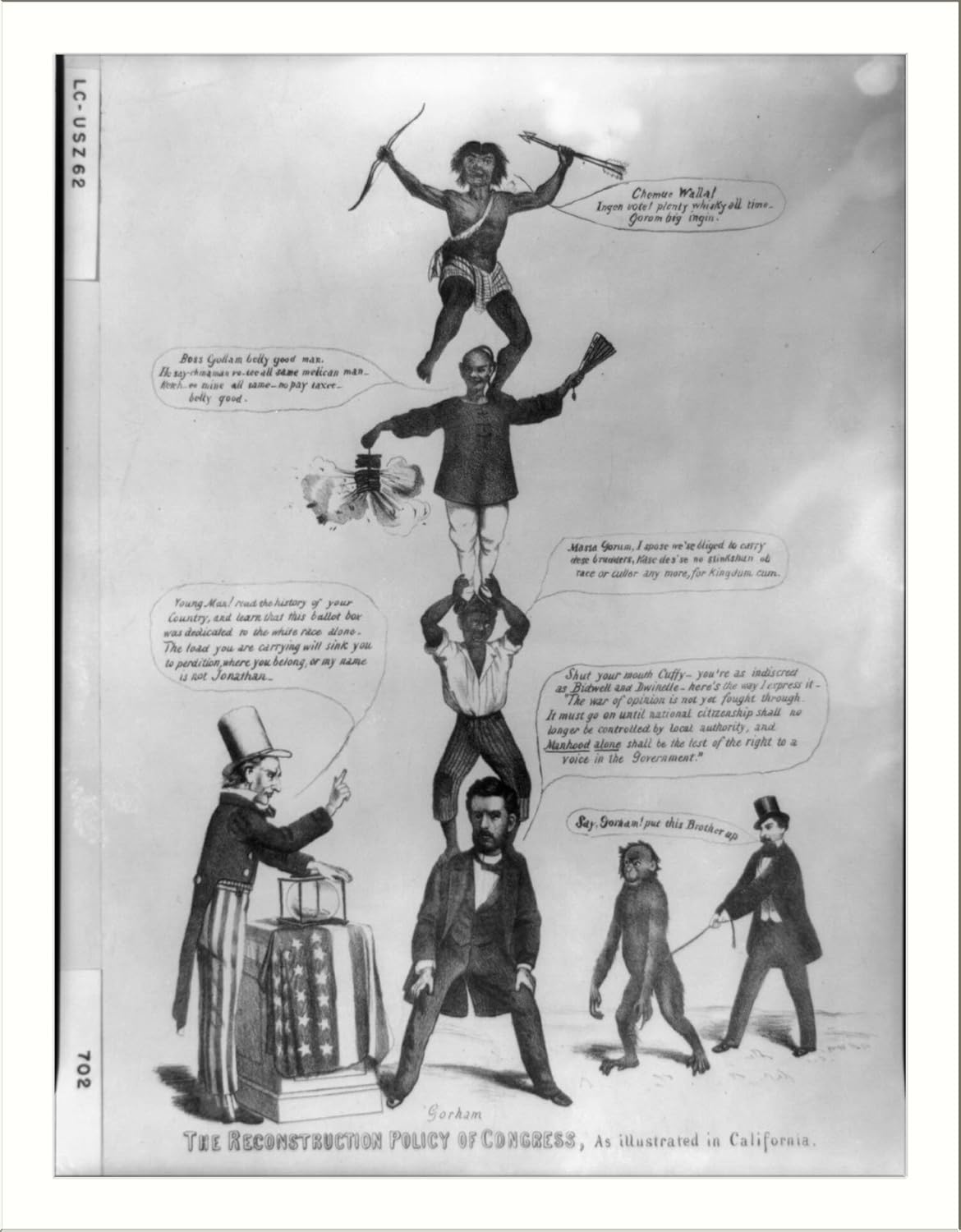
- Reconstruction CA: At the time, Chinese population was 8%; now it's 4%. Racist anti-Gorham political broadside can be seen here. Restrictive racial covenants: limited reselling of homes mainly to whites. "No person or persons of Asiatic, African or Negro blood, lineage, or extraction shall be permitted to occupy a portion of said property." Early 1900s to 1940s.
- LA's Chinese massacre of 1871: race riot, slaughtering 18 Chinese immigrants.
- Chivalry coalition: Gwin, Pico, Brent. As a pro-slavery Democrat, Gwin had an ideological direction which gave birth to the institutionalized right wing. During the 1850s, Gwin was not only the leading voice of local conservatism, but he was the catalyst to those who feared the impending changes in California society.
- 1850s: NoCal vs. SoCal: SoCal was waypoint heading to SF.
- Open letter, Avila to Pico: pushing for the Democratic party in LA.
- Slave mart, 1850s LA, Horace Bell.
- Saturday, October 5, 2013, 1 p.m.: Fireside Chat at Campo de Cahuenga: Campo Director John Watkins (descendant of Romulo Pico) will present "Movers and Shakers of Early California" and relate his personal family stories that are interwoven into the regional history.
- John Gast's "American Progress." Painting personifying manifest destiny. See notes here.
-
Great mission book to share with students: California Missions: The Earliest Series of Views Made in 1856. Click here to buy online.


No comments:
Post a Comment